
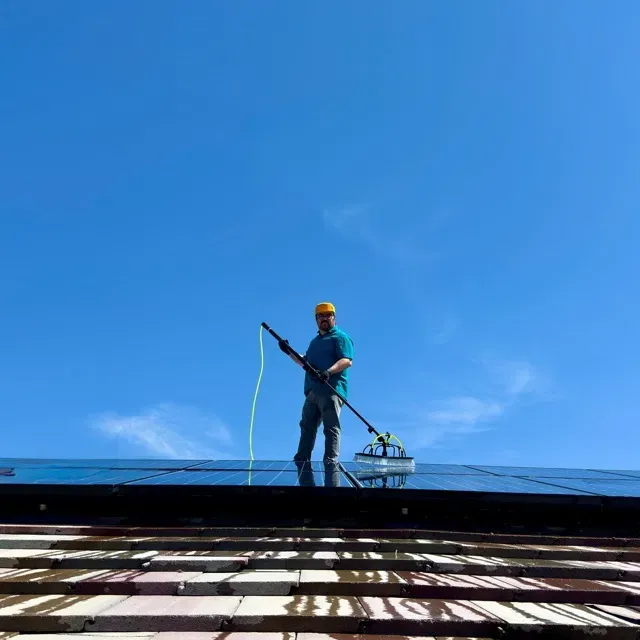
Solar panels are built to sit outside, but “outside” means something specific in the Imperial Valley. Fine desert dust, agricultural activity, long dry stretches, bird activity, and hard-water residue all have a way of finding the glass. A panel can look only a little dusty from the ground and still have a film that deserves attention.
There is no single calendar that fits every roof. The useful question is not “What month is it?” but “What has this array been exposed to, and what can we see on the glass?” Start with a reasonable schedule, then adjust after a season of paying attention.
Why the Valley needs a different routine
Rain is not a dependable rinse here, and a wind event can put a new layer of fine dust on a clean array quickly. Near open fields, roads, construction, or active irrigation, particles and overspray can settle faster. Heat also makes residue less forgiving: a little buildup has more time to dry onto the surface instead of being washed away.
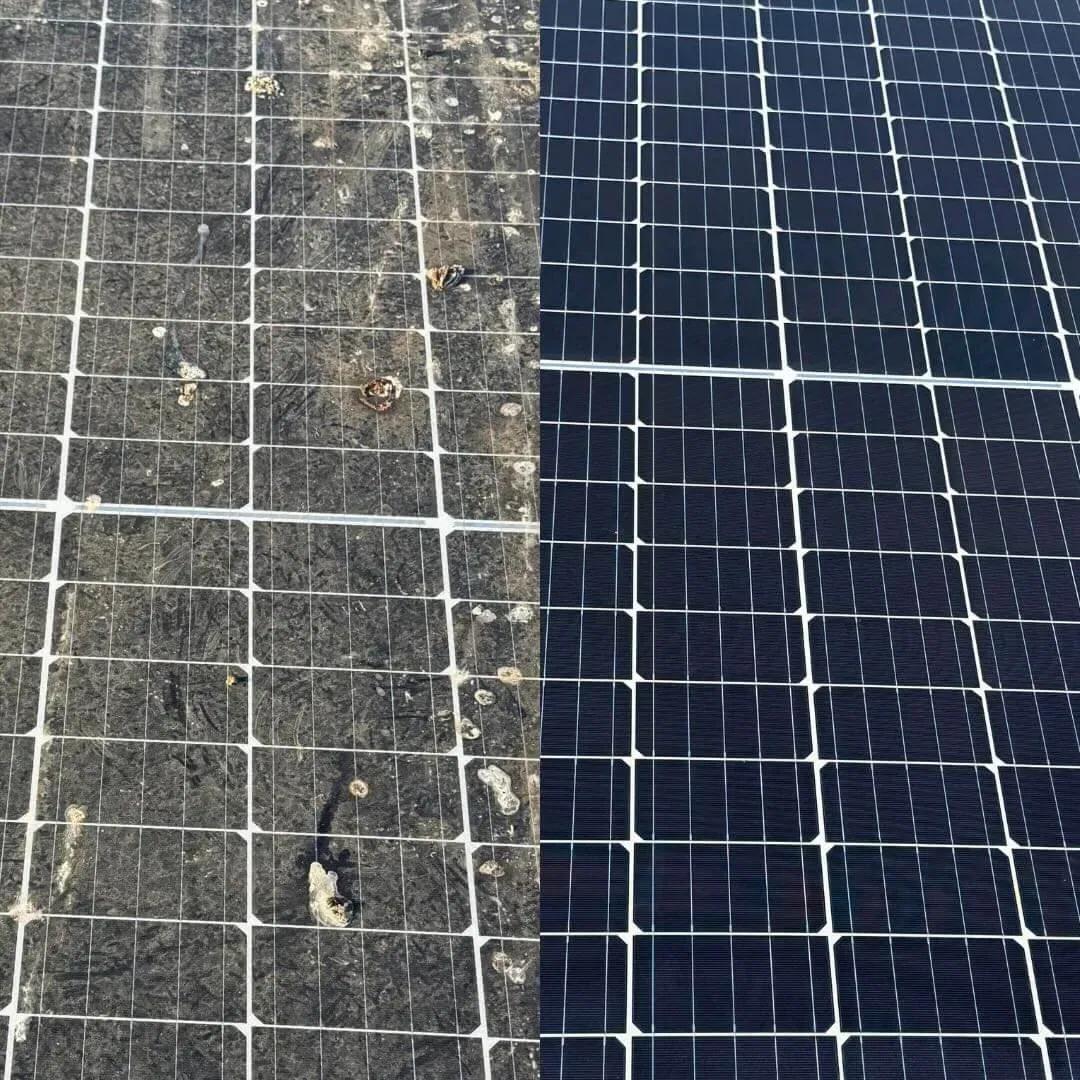
Bird activity is another practical variable. Droppings are localized, but they are harder to ignore and can leave spots that need careful attention. Look at the lower edges, areas under favorite perches, and the places where dust collects against the frame.
“The best schedule is the one that matches the property, not the one that looks neat on a calendar.”
A good starting schedule
For many Imperial Valley homes, twice-yearly maintenance is a sensible place to begin. A seasonal visit gives you a chance to clear the dust before the hottest stretch and to remove residue that accumulated afterward. Homes with heavier exposure may benefit from more frequent checks and cleanings.
Use this as a planning guide, then let the roof and the glass make the final call:
| Property conditions | Starting point | What to watch |
|---|---|---|
| Moderate dust and easy roof access | Every six months | Visible film, bird spots, or a hazy finish |
| Open fields, dirt lots, or frequent wind | Every three to four months | Fast dust return and residue along frame edges |
| Heavy bird activity or irrigation overspray | Inspect more often | Localized buildup and mineral spotting |
| After a major wind or dust event | Check the array | Fresh coverage before it bakes on |
How to decide if it is time
Before booking a cleaning, take a slow look from a safe place on the ground. Never climb onto a roof just to inspect the panels. A clear reflection, visible grid lines, and an even surface are useful visual clues. If your monitoring app shows a change, treat it as a prompt to investigate rather than proof that cleaning is the only cause.
- Check the array from the ground after a dry, windy stretch.
- Look for a dull film, bird spots, water marks, or heavier buildup on the lower rows.
- Compare the glass across the array; uneven soiling can be easier to spot than light overall dust.
- Note nearby conditions such as harvest activity, construction, irrigation overspray, and roosting birds.
- Choose a schedule you can repeat and review it after the next service.
Signs that deserve attention
- Mineral spots that remain after a normal rain or rinse.
- Bird residue concentrated below roof fixtures or nearby trees.
- Dust lines where the panel meets its frame.
- A cloudy appearance that changes the way the array reflects light.
- New buildup after a storm, field work, or nearby construction.
Take one photo of the same corner of the array after each visit. It gives you a simple visual record of how quickly dust and spots return, which is much more useful than guessing from memory.
Why the rinse matters
Tap water can leave minerals behind as it dries, especially on hot glass. That is how a quick rinse can turn into a spotted surface. A professional cleaning should use a method appropriate for solar equipment, a controlled rinse, and tools that do not grind dust across the glass. Pressure-washer shortcuts and harsh chemistry are not a good default for a surface with coatings, seals, and a manufacturer’s care instructions.
If your panels are under warranty, keep the manufacturer’s cleaning guidance handy. When in doubt, ask what method will be used and whether the crew can explain why it is appropriate for your array.
A maintenance plan that holds up
Good maintenance is mostly consistency. Put the next visit on the calendar before the current one fades from view, and move it earlier when local conditions change. If the property is near agriculture or an active building site, a shorter interval may save you from a heavier corrective clean later. If the array stays clear for a full season, you may have evidence that a lighter routine is enough.
That is the whole field-guide version: inspect safely, account for the desert, use a careful method, and let what you observe set the pace.